Coding Smarter: A WhatsApp Engineer on AI’s Real Impact
Coding less, thinking more, and what AI can—and can’t—do for software engineers.
Atul Karmarkar, a software engineer at WhatsApp, has built his career working on large-scale backend systems for some of the world’s most demanding platforms. He has developed a deep understanding of what it takes to build reliable, high-performance infrastructure — and how that work is evolving in the era of artificial intelligence.
In this conversation, Mr. Karmarkar discusses how AI is reshaping the day-to-day experience of software engineers, what it’s still not very good at, and what skills future developers will need to thrive in a fast-changing industry.

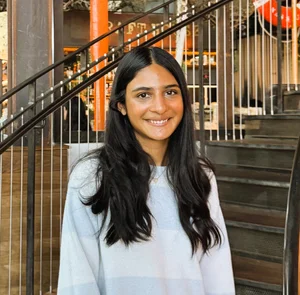
Mr. Atul Karmarkar, Software Engineer at WhatsApp, Meta (Photo courtesy of Mr. Karmarkar)
AI at Work: Accelerating, Not Replacing
Mr. Karmarkar is clear: AI has not fundamentally redirected his career path — yet. But its growing presence is undeniable. “AI is seeping into our everyday jobs at a rate nobody had imagined,” he says. “Even engineers like us, with 15 to 20 years of experience, have been surprised by the breakthroughs of the past two years.”
At WhatsApp, Mr. Karmarkar uses AI assistants integrated directly into development environments. These tools enhance productivity by helping write, understand, and troubleshoot code.
“For example,” he says, “we used to spend hours trying to understand what old code was doing. Now, we can ask AI to explain it in human language. That reduces cognitive overload and helps us move faster.”
AI also contributes in more subtle but significant ways: it autocompletes code with surprising accuracy, detects flaws early, and even enforces best practices in structure and syntax. “It’s very good at guessing what you’re about to type and helping you write better code, with fewer mistakes,” he explains. “That alone is a big value-add.”
But AI Has Limits Right Now — Especially Around Reasoning
While Mr. Karmarkar sees AI as a powerful productivity tool, he’s also clear-eyed about what it can and can’t do at this stage.
“It’s really good at identifying patterns,” he explains. “In large systems with thousands of components running in parallel, it can filter out the noise — spotting issues we’ve seen before, so humans don’t have to.”
But when it comes to deeper inference, today’s AI still struggles. “Even the best models we have right now falter when trying to reason or read between the lines,” he says. “If A and B happen, a human can often reasonably infer that C has occurred — even without being told directly. I haven’t yet seen an AI model that can do that kind of multi-step reasoning reliably.”
He’s careful not to suggest that AI will never develop these capabilities — just that, for now, this kind of intuition and context-aware judgment is still a uniquely human strength.
The Human Element in Software Engineering
As AI automates more tasks, will engineers still be needed?
Absolutely, says Mr. Karmarkar — but their role is evolving.
“AI is going to help us code less, but we’ll always need engineers to verify what AI produces, and to choose between the many design options it suggests,” he says. “Fundamentally, we still need people who understand systems deeply — especially in backend and infrastructure roles.”
He emphasizes that the design of software — not just its implementation — is where human creativity shines. “Software is about design, and that’s a creative process. That’s something I don’t believe AI will ever replace.”
For aspiring engineers, he recommends cultivating both a strong technical foundation and a willingness to embrace AI as a tool, not a crutch.
“Don’t let these tools replace your understanding,” he advises. “Use them to improve productivity, but always know what’s happening under the hood.”
Skills for the Future: Learn to Build, Learn to Automate
When asked what skills will matter most in the coming years, Mr. Karmarkar doesn’t hesitate: automation.
“In systems engineering, your success depends on how well your platform can monitor and fix itself,” he says. “It’s humanly impossible to keep track of everything at scale, so automation — powered by AI — is essential.”
He believes that engineers who can effectively use existing AI tools, and even build new ones to solve domain-specific problems, will be especially valuable. “Learning how to apply AI is going to be a key part of being a great engineer.”
Fast Five with Mr. Atul Karmarkar
1. What did you want to be when you were a kid?
A pilot. That always fascinated me.
2. One task in your job you’d gladly let AI do?
Writing tests. It takes an awful lot of time to write and maintain them.
3. Something humans will always do better than AI?
Creative jobs — especially designing software. That’s where the beauty lies.
4. The last thing you asked AI?
I used ChatGPT to find the best island in Hawaii for scuba diving .
5. One job you’d never trust AI to do?
Making decisions for me. I might delegate tasks to AI, but I always want to make the final call — unless I’ve specifically asked it to decide.
Final Thoughts: Build Understanding, Not Just Code
Mr. Karmarkar’s parting advice for future developers is simple, but essential:
“Understand the fundamentals. Learn how things work. Use the tools that improve your productivity, but never stop being curious about what’s happening under the hood.”
In an era of rapidly accelerating automation, Mr. Karmarkar reminds us that the best developers won’t just be fast — they’ll be thoughtful. And while AI may change the way we work, the human capacity to design, reason, and understand remains as essential as ever.