AI Is Getting Personal, and Behavioral Science Is Becoming Essential
Dr. Steph Habif on behavioral science, trust, and designing AI systems around real people
AI systems are becoming increasingly personal at the exact moment society is still figuring out how much to trust them. That tension sits at the center of Dr. Steph Habif’s work.
Dr. Habif is a behavioral scientist and Head of AI Health Coaching at Google, where she works at the intersection of psychology, health, and generative AI. Her work focuses on how people interact with digital health technologies, from wearables and fitness trackers to AI-powered health coaching systems. And according to her, one of the biggest opportunities in AI is expanding access to guidance, coaching, and health support at a scale that wasn’t previously possible.
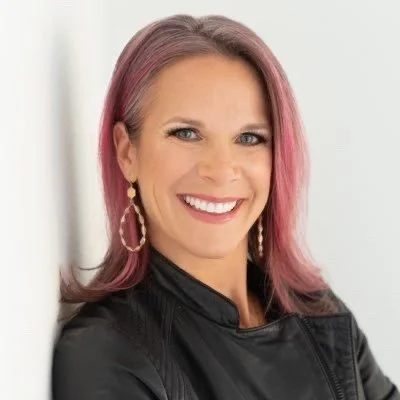
Dr. Steph Habif, Behavioral Scientist and Head of AI Health Coaching at Google (Photo courtesy of Dr. Habif)
The Problem Behavioral Scientists Have Studied for Decades
Behavioral science has long understood something frustratingly simple: Knowing what to do doesn’t mean people will do it.
“In my field, we talk a lot about what’s called the intention-action gap,” Dr. Habif explained.
“Just because somebody intends to do something doesn’t mean they’re actually going to do it”
People know they should sleep more. Exercise. Eat healthier. Take medication consistently. Reduce stress.
But behavior change is hard.
That’s where Dr. Habif sees enormous potential for AI-powered coaching systems.
The promise of tools like Gemini-powered health coaching, she says, is not in simply giving people information, but in helping them move closer to following through.
What makes modern AI systems different is that they can sustain conversation over time. They can remember context. They can adapt to how someone communicates. And increasingly, they can meet people where they already are: on their phones, watches, laptops, and daily routines.
AI as a Health Translator
Dr. Habif described one of the most immediate shifts AI has created in her field: translation.
Health technologies have generated data for years — heart rate, sleep metrics, recovery scores, activity levels. But most people don’t know what to do with the information.
AI changes that.
“Now we can start using generative AI tools inside those apps to explain what the data means,” she said.
That matters because healthcare information is often intimidating, technical, or inaccessible.
Historically, personalized health guidance required expensive access to doctors, nutritionists, trainers, or specialists. AI dramatically lowers that barrier.
Dr. Habif repeatedly returned to one word during our conversation: accessibility.
For the first time, people around the world can interact conversationally with systems that provide personalized coaching, explanations, and guidance, often for free.
Why People Open Up Differently to AI
One of the most fascinating parts of our conversation centered around trust.
Or more specifically: disclosure.
Dr. Habif explained that people are increasingly comfortable sharing highly personal information with AI systems; sometimes more comfortably than they would with a psychologist or physician.
“People are feeling more and more comfortable sharing personal health information with an AI coach. They’re maybe talking about things they wouldn’t talk to a psychologist or a human doctor about.”
That creates an enormous opportunity. And an enormous responsibility.
Because when people lower their guard with AI systems, those systems need to respond safely, accurately, and ethically.
This is a major part of Dr. Habif’s work: stress-testing AI systems, identifying risk scenarios, and ensuring health-related responses are clinically grounded. She described extensive “red teaming” processes, where experts intentionally pressure-test models before they are released publicly.
The stakes become especially high when the users are teenagers, vulnerable populations, or people dealing with mental health conditions.
The challenge is no longer simply what AI can do.
It’s what AI should do.
The “I’ve Been Dead for Days” Story
Midway through the interview, Dr. Habif shared a story she’s currently writing herself — one that perfectly captures the fragile psychology of trust in health technology.
A woman grieving the death of her mother purchased a wearable device because she was struggling with sleep and exhaustion. The device helped her better understand her sleep patterns during an emotionally difficult period.
But another metric, her oxygen level readings, appeared obviously wrong.
“According to this metric, I’ve been dead for days,” the woman told Dr. Habif.
The problem wasn’t just inaccurate data.
It was what the inaccurate data did psychologically.
The woman’s mother had recently been very ill, and oxygen levels had become emotionally loaded numbers during that experience. Seeing inaccurate oxygen readings didn’t just undermine the device’s credibility; it triggered grief, frustration, and distrust.
Eventually, she stopped using the product altogether.
“People trust products, tools, and companies that deliver on their promise.”
That story illustrates something behavioral scientists understand deeply:
Humans don’t interact with data objectively.
We interpret numbers emotionally, contextually, personally.
And once trust is disrupted, rebuilding confidence can be difficult.
Should Students Study Humans or Technology in this new world?
Toward the end of our conversation, Dr. Habif gave one of the clearest frameworks I’ve heard for students interested in AI-related careers.
“Do you want to specialize in the humans, or do you want to specialize in the technology?”
That distinction, she said, should shape how students think about their education and career path.
Behavioral science, psychology, anthropology, and cognitive science focus on understanding humans:
· Why people make decisions
· Why habits form
· What support systems work
· How trust develops
· Why behavior changes — or doesn’t
Engineering and technical disciplines focus on building the systems themselves:
· Designing interfaces
· Building models
· Architecting technologies
· Creating AI products
Both paths matter.
Increasingly, the most interesting work happens at the intersection of the two.
“Technology will always advance,” Dr. Habif said. “But for as long as the human race exists, we will need experts in human behavior.”
Fast Five with Dr. Steph Habif
What did you want to be when you were a kid?
A sports psychologist; though she says she’s still figuring out what she wants to be when she grows up 😊
One task you’d gladly let AI do?
Budgeting and financial accounting.
Something humans will always do better than AI?
Emote. Touch. Laugh.
Last thing you asked AI?
She used Google Gemini to brainstorm titles for an essay about wearable health data and trust.
One job you’d never trust AI to do?
Take care of her children.
The Bigger Picture
AI is changing how people access expertise.
But behavioral science remains fundamentally about understanding humans: their motivations, fears, habits, trust, and decisions.
The technology is evolving rapidly.
Human behavior is evolving much more slowly.
Which means the challenge is no longer just building intelligent systems, it’s designing systems that understand how humans actually behave.