What Happens When AI Meets Fine Jewelry?
From Dell to Diamra, founder Komal Patel shares how generative AI is changing custom jewelry and what she's learned about creativity, technology, and entrepreneurship.
When I think of AI, jewelry design isn't exactly the first thing that comes to mind. Coding? Sure. Healthcare? Definitely. But designing a ring inspired by your grandmother's jewelry or a family memory? That got my attention.
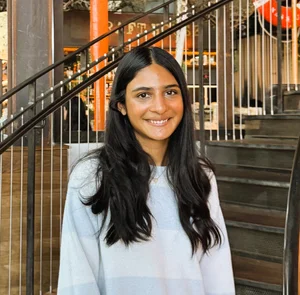
Meet Komal Patel, founder of Diamra, a generative AI-powered platform that's helping jewelers turn customers' ideas into custom jewelry designs. After spending two decades building technology platforms, including at Dell, Patel decided to bring her experience into a completely different industry.

Ms. Komal Patel, CEO & Founder, Diamra. (Photo courtesy of Ms. Patel)
What I found especially interesting is how personal custom jewelry can be. A customer might have a clear idea of how they want a piece to feel, without knowing how to describe the design. With generative AI, they can explore different possibilities and actually see their ideas take shape.
I wanted to learn how this technology is changing the jewelry business, what happens when AI meets cultural traditions and craftsmanship.
Here's what Patel had to say.
Jewelry is such a personal form of expression, and custom pieces often have a story behind them. What excites you most about bringing generative AI into the custom jewelry experience?
What excites me most is the possibility of helping more people participate in the creative process. Most customers know how they want a piece to feel, but they may not have the vocabulary or drawing skills to explain it. Generative AI can help turn a memory, photograph, cultural reference, or rough idea into something they can see and respond to.
That is especially meaningful with custom jewelry because the finished piece often represents a person, relationship, or important moment. AI should not replace that story. It should help the customer and jeweler bring it to life together.
How is the ability to visualize different versions changing the custom jewelry experience for customers and jewelers?
Traditionally, a customer might describe an idea and then wait days for a sketch or rendering. That can make the process feel intimidating, especially if the customer is unsure of what they want.
Now, the customer and jeweler can explore possibilities together in minutes. They might compare different stones, settings, proportions, or design directions before committing to one. The customer becomes an active participant rather than simply approving a finished recommendation.
For jewelers, it creates a richer conversation and helps them understand the customer's taste earlier. It can reduce uncertainty, but the jeweler's expertise is still essential in determining what will be beautiful, wearable, structurally sound, and possible to manufacture.
How can AI help jewelers create designs that feel personal, including different cultural influences?
AI can help people express influences that are sometimes difficult to communicate through words alone. A customer could bring family photographs, architectural details, traditional motifs, inherited jewelry, or colors connected to their culture. The jeweler could then explore how those elements might inspire a contemporary piece.
However, cultural understanding cannot come from technology alone. AI can generate possibilities, but the customer provides the meaning and the jeweler brings judgment and sensitivity. Personalization is not simply adding a symbol to a design. It comes from understanding why that symbol, material, or tradition matters to the individual.
If we fast-forward ten years, how do you think AI will change jewelry shopping? What do you hope will stay the same?
I believe jewelry shopping will become much more participatory. Instead of searching through thousands of finished products, customers will be able to begin with an idea and shape it around their taste, budget, story, and lifestyle. They may start online, continue with a jeweler in person, and move seamlessly from inspiration to a piece that can actually be made.
The distinction between discovering jewelry and designing jewelry will become less rigid. More people will be able to say, "I like this, but can we make it feel like me?"
What I hope stays the same is the human significance of jewelry. People will still rely on trusted jewelers. Craftsmanship will still matter. And a piece will still become meaningful because of the person who gave it, wore it, created it, or passed it down.
You were a successful tech executive before founding Diamra and entering the jewelry industry. What did you have to unlearn, and what skills from your previous career became valuable as a founder?
I had to unlearn the idea that you need to have everything figured out before you begin. In a large technology company, you usually have established teams, processes, budgets, and data. As a founder, you often have incomplete information and limited resources. You have to make a decision, learn from the market, and adjust quickly.
I also had to learn that building a strong product is not enough. You have to earn trust, help customers change familiar habits, and stay close to their everyday problems.
The most valuable skills I carried with me were listening to customers, turning complicated problems into a clear product direction, and bringing technical and business teams together. My technology background also taught me to look beyond an individual feature and think about the larger system we could build.
As AI becomes widely available, where will distinctly human skills matter most?
As AI makes creation faster, human judgment will become more important, not less.
AI can generate many options, but it cannot determine which one carries the right meaning for a particular person. It does not replace a jeweler's eye for proportion, a craftsperson's knowledge of materials, or the trust built through a personal conversation.
Taste is knowing what to choose. Craftsmanship is knowing how to make it well. Storytelling is understanding why it matters. AI can support each of those things, but the most memorable jewelry will still come from human imagination, emotion, and care.
The Fast Five
A few quick questions to get to know the person behind Diamra!
1. What did you want to be when you were a kid?
An artist.
2. One part of buying or designing jewelry you'd gladly let AI handle?
Turning an idea in my head into something I can see.
3. One part you would never want AI to take over?
The human conversation that uncovers why the piece matters.
4. If you could redesign one piece of jewelry from history using Diamra, what would it be?
Princess Diana's sapphire engagement ring. I would love to see how people reinterpret such an iconic design while preserving its character.
5. Complete the sentence: "The best founders are ______."
Curious enough to keep learning and persistent enough to keep going.
My Takeaway
One thing that stuck with me was Patel's description of taste, craftsmanship, and storytelling. I had never really thought about jewelry design in those terms, but it makes sense. A piece of jewelry can look beautiful, but the story behind it can make it even more special.
I also loved learning about her journey from Dell to Diamra. It's pretty cool that two decades of experience in technology could lead to building a company in such a creative industry. It makes me wonder what other unexpected combinations of careers and technology we'll see as AI becomes more common.
And I have to say, the idea of using AI to reimagine Princess Diana's (now Princess Catherine’s) famous sapphire ring sounds like a pretty fun experiment!