AI Won’t Replace Doctors. But Doctors Who Use AI Might Replace Those Who Don’t.
Dr. Atul Gupta on AI-assisted medicine, the future of personalized care, and why technology may transform doctors’ work without replacing the human skills that matter most.
The world of healthcare can sometimes feel distant — a maze of specialties, machines, and decisions happening far away from everyday life. But talk to Dr. Atul Gupta, Global Chief Medical Officer for Diagnosis and Treatment at Philips, and a practicing interventional radiologist, and suddenly the future of medicine snaps into focus.
He’s one of the top leaders shaping the next generation of medical technology: AI-powered imaging, robotic procedures, and data-driven precision care. Yet during our conversation, what stood out wasn’t just the cutting-edge technology. It was how deeply human his vision of healthcare remains.
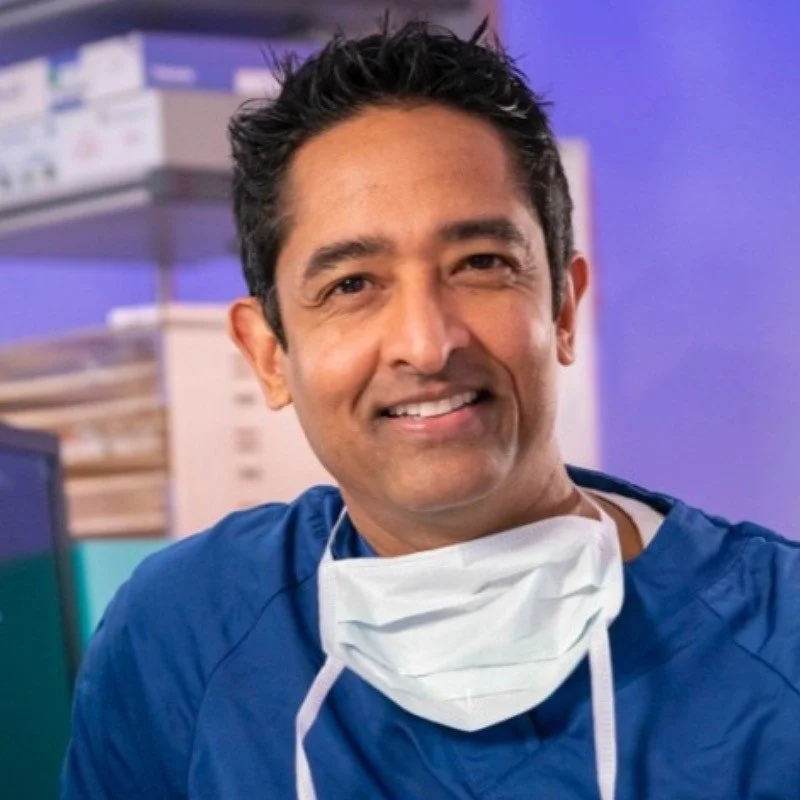
Atul Gupta, M.D., Interventional Radiology, Global Chief Medical Officer for Diagnosis and Treatment at Philips (Photo courtesy of Dr. Gupta)
From Detective Work to “Surgery Without a Scalpel”
Dr. Gupta likes to say that radiologists are detectives in medicine. “A diagnostic radiologist looks at X-rays, CT scans, and MRIs to find out what’s going on inside your body without opening you up,” he explained. Interventional radiologists like him go a step further: they treat what they find.
“We can open up blocked arteries, fix heart valves, remove clots from the brain, even kill tumors — all through a pinhole in the skin,” Gupta said. “It’s kind of like surgery without a scalpel, and the best part is that patients can sometimes go home the same day with just a Band-Aid.”
That combination of imaging and precision tools represents a larger trend in medicine, one that’s about doing more with less: less invasion, less risk, less recovery time.
AI as “Assisted Intelligence,” Not Artificial Intelligence
Dr. Gupta avoids the word “artificial” when talking about AI. Instead, he calls it “assisted intelligence.”
“It’s an assistant. It’s not going to replace us — it’s becoming our teammate,” he said. “It helps us scan patients faster, make image quality better, and even detect issues before a human looks at the scan.”
At Philips, AI already powers MRI scans that are three times faster and images that are up to 65% sharper. In stroke care, AI algorithms can spot early signs of a brain clot and immediately alert the stroke team before a doctor even reviews the image.
It’s this kind of behind-the-scenes partnership that’s quietly transforming healthcare — making radiologists and surgeons faster, more precise, and, ultimately, more human in their work.
“Medicine is not just about data,” Gupta emphasized. “It’s about empathy, judgment, and putting the whole story together, and those are deeply human skills.”
If anything, AI should strengthen the human side of care. By handling the repetitive analysis and documentation, AI can give clinicians more of what they’re always short on — time. Time to listen, to explain, and to be fully present with patients in ways no algorithm can replace.
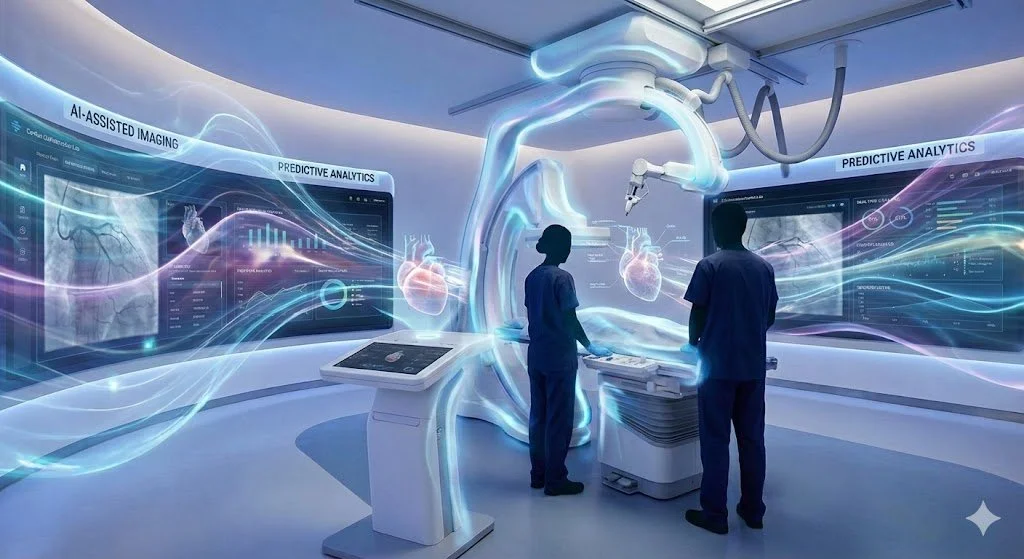
Concept Visualization of a Future Cath Lab with AI-Assisted Workflows. AI generated image: Google Gemini Nano Banana / Anika M.
The AI-Driven Future of Personalized Medicine
Healthcare is moving toward what Dr. Gupta calls a “one size fits one” model.
“AI can take all of your data — imaging, lab work, even data from wearables — and find patterns unique to you,” he said. “It helps doctors choose the right therapy or predict which treatment might work best for your specific body.”
It’s the next frontier of precision medicine — using vast datasets to make treatment as individualized as a fingerprint. Gupta believes this will shift medicine from reactive to predictive: catching disease before symptoms even appear.
Robotics and the Promise of Global Access
One of the most thrilling areas of Dr. Gupta’s work involves endovascular robotics. He envisions a world where an interventional specialist in Tokyo could perform a procedure on a patient in San Diego.
“When you add AI to robotics, you give humans superhuman vision and control,” Gupta said. “It means safer operations, less pain, and faster recovery for patients everywhere.”
That vision isn’t science fiction. Philips and other innovators are already developing hybrid operating rooms where imaging, robotics, and AI work together in real time. Dr. Gupta believes this could help address one of the biggest global healthcare challenges — the shortage of skilled specialists.
The Human Element: Regulation, Trust, and Responsibility
Despite his optimism, Dr. Gupta stresses that AI in healthcare must be proven safe and reliable.
“In healthcare, you can’t just say it works — you have to prove it,” he explained. “That means clinical trials, regulatory reviews, and years of testing before a product reaches a patient.”
Equally important is trust — both from doctors and patients. At Philips, it’s called ‘responsible AI’: systems that are transparent, ethical, and focused on improving patient outcomes, not just efficiency.
That balance between innovation and responsibility will define which technologies truly improve lives and which fade into hype.
Will AI Reduce the Number of Doctors?
I asked a question a lot of young people wonder:
If AI can read images and analyze patterns, will we need fewer radiologists?
Dr. Gupta didn’t hesitate:
“The demand for healthcare is only increasing. We aren’t going to eliminate physicians — if anything, we need more.”
He explained how the world’s aging population, chronic diseases, and overall increase in imaging studies mean radiologists are busier than ever.
But he did highlight something interesting: AI may reshape which tasks radiologists spend time on.
Repetitive scans? AI can help.
Early triage? AI can help.
But complex decisions? Rare cases? Conversations with patients?
Still human.
Which Medical Specialties Will Change the Most?
Some careers will be reshaped more than others.
Fields that rely heavily on pattern recognition — pathology, diagnostic radiology, dermatology — will see the fastest integration of AI tools.
But Dr. Gupta stressed that change doesn’t equal elimination. Instead, these doctors may become more like pilots — overseeing intelligent systems, making high-level decisions, and stepping in when judgment is needed.
“AI can help, but it can’t take over responsibility.”
Meanwhile, specialties requiring direct procedures, physical skills, or continuous patient interaction — like surgery, emergency medicine, or interventional radiology — will evolve, but remain deeply hands-on.
AI and the Next Generation of Doctors
Dr. Gupta believes today’s students are entering a world of medicine that’s both more advanced and more human than ever.
“Future doctors should start learning these tools now,” he said. “They don’t have to be coders, but they need to understand what technology can do for them.”
In fact, he’s seen medical schools in Asia and Europe already integrating AI training into their curricula. Still, Dr. Gupta reminds students that the timeless skills — empathy, curiosity, and problem-solving — will never go out of style.
Fast Five with Dr. Gupta
Before wrapping up, I asked Dr. Gupta a few rapid-fire questions:
1. What did you want to be when you were a kid?
“An airline pilot! I was fascinated with flying and technology — now I just navigate through the human body instead of the skies.”
2. One task in your job you’d gladly let AI do?
“Paperwork. If AI could take care of forms and documentation, I’d spend more time on patient care.”
3.Something humans will always do better than AI?
“Show empathy. Machines cannot look someone in the eye and tell them they’ll be okay.”
4. The last thing you asked AI? And to which AI?
“I used image tools like DALL·E to imagine what future operating rooms might look like — and funny enough, they look like the ones we’re building now.”
5.One job you’d never trust AI to do?
“Parenting.”
Final Thoughts
“AI isn’t replacing doctors,” Dr. Gupta said. “It’s empowering them — giving them superhuman abilities to heal, diagnose, and care for people everywhere.”
For all the futuristic technology he works with, Dr. Gupta’s vision of medicine remains profoundly human. AI may power the machines, but it’s empathy, curiosity, and connection that will continue to guide the hands behind them.