How AI Is Transforming Fashion Marketing
AI can write copy — but it can’t be funny: a fashion exec on why creativity still matters.
Artificial intelligence has already rewritten the rules of advertising and analytics. But in fashion, where creativity, storytelling, and intuition rule, can algorithms really understand what makes people love a brand?
To find out, I sat down with Kim Gallagher, Executive Director of Marketing and Customer Success at Nuuly, the subscription clothing rental service from URBN (the company behind Urban Outfitters, Anthropologie, and Free People). Gallagher has spent her career at the crossroads of marketing and technology, leading data-driven teams while keeping creativity at the heart of her work.

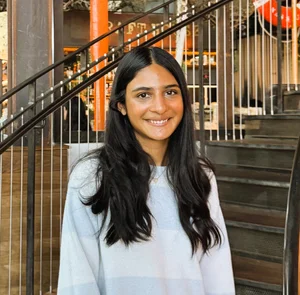
Kim Gallagher, Executive Director of Marketing, Nully, an URBN brand. (Photo courtesy of Ms. Gallagher)
She believes that AI is changing what kind of marketers succeed.
“Customers really embrace the use of AI as long as it truly solves a problem for them,” Gallagher told me. “If it’s just a chatbot that can’t actually help, people get frustrated. But if you build it right, so it can act — not just talk — then customers love it.”
At Nuuly, her team’s AI-powered customer service bot can detect when a package has been scanned by UPS, automatically process returns, and even issue refunds, no human agent needed. “We’ve seen a ton of success,” she said. “It’s about letting AI be agentic — take action, not just answer.”
Turning Unstructured Data into Smart Decisions
If customer service is where AI meets users, data is where it transforms business. Gallagher’s teams work with huge amounts of feedback and survey data; it's far too much for humans to manually process. “AI is very good at dealing with robust data sets,” she explained. “One of the fastest wins has been in unstructured data — open-ended survey responses, freeform feedback, that kind of thing.”
Nuuly uses AI to analyze thousands of customer comments, grouping similar feedback and identifying new trends, like how people first discover the brand or what drives them to rent again. The system highlights key themes, provides numbers behind them, and displays everything in a dashboard that the team checks daily. It’s not just faster — it’s deeper. “The AI can surface things we might have missed,” Gallagher added. “It’s like giving your analytics team superpowers.”
Creativity in the Age of Algorithms
Fashion marketing has always relied on creativity — the ability to create emotional connection, to inspire. So what happens when AI enters that world?
Gallagher sees it as a tool for speeding up the process, not replacing the art. “When we’re concepting a campaign, our creatives can use AI to create storyboards,” she said. “It used to be a manual process — now they can use prompts and generate visuals to share ideas more easily.”
She noted that many brands have explored AI-generated images and motion for product pages, but says the industry still has a way to go before the technology fits into legal and ethical frameworks — especially around using models’ likenesses. “There aren’t really standardized contracts yet for how AI can use a person’s likeness,” she explained. “You’d have to change the whole industry.”
Her bottom line: AI may help, but it won’t replace human originality anytime soon. “Where creative isn’t your differentiator, AI might be able to do the job,” Gallagher said. “But for brands like ours, where creative is the differentiator, you need best-in-class talent.”
“The internet already made everything look similar — AI might accelerate that. True creatives are the ones who make a brand stand out in a sea of sameness.”
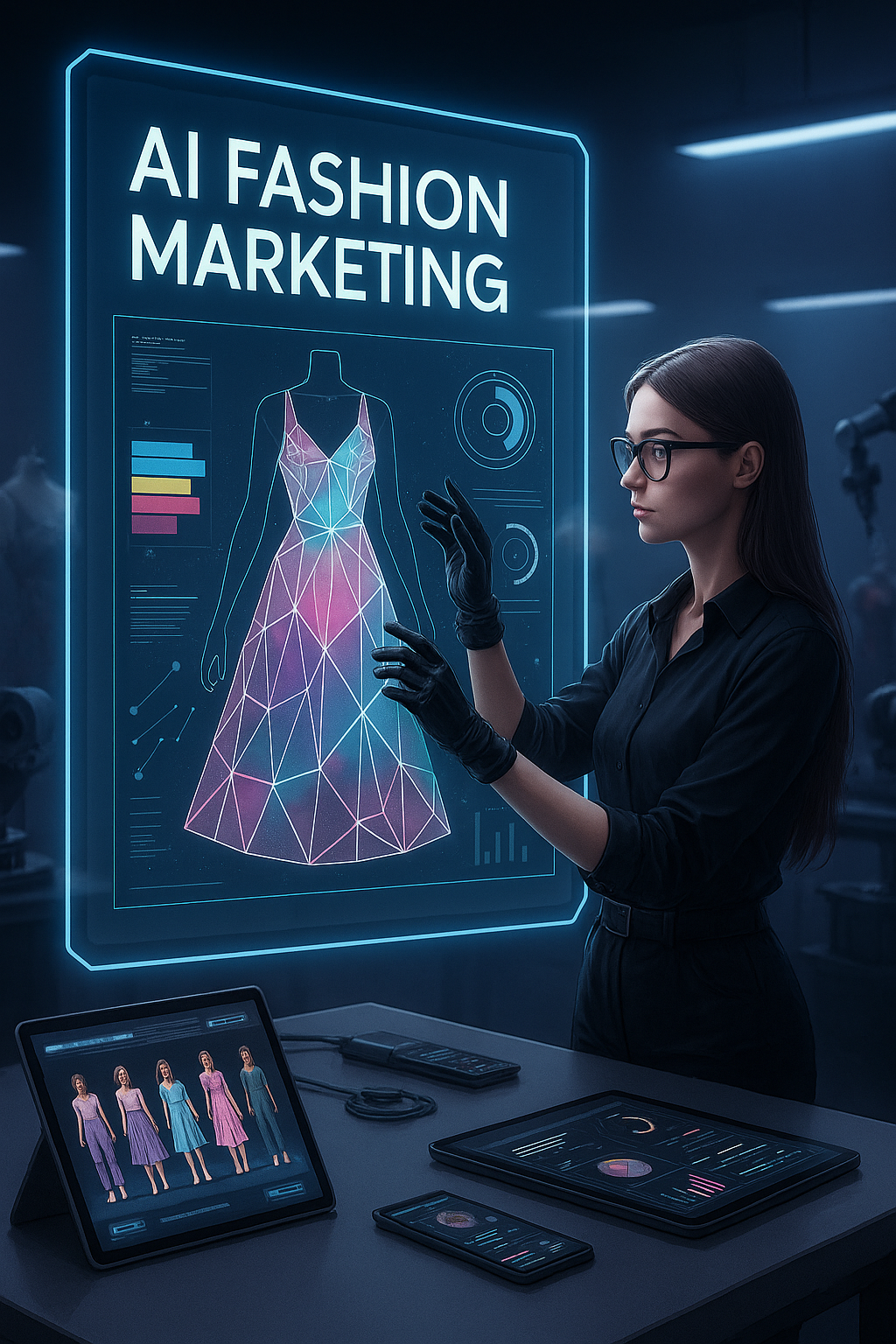
AI is reshaping how brands connect with consumers — blending data, creativity, and technology in new ways. Image: DALL·E / Anika M.
The Fine Line Between Personalization and Privacy
Nuuly’s model — a personalized clothing rental subscription — depends on understanding customers’ tastes. Gallagher believes AI can deepen personalization, but only if done with transparency.
“People have different comfort levels,” she said. “Some customers would love if we used their calendar to help them pick outfits, others want to choose everything themselves. So personalization has to be opt-in.”
She distinguishes between personalization and curation:
“It’s not just about showing someone what they already like. Great brands should still surprise and inspire their customers. Otherwise, you lose discovery.”
Ethics, Models, and a Changing Industry
When I asked if she sees regulations coming for AI in creative industries, Gallagher didn’t hesitate. “Not yet — at least not from the government,” she said. “But you’re seeing movement at the union and agency levels.”
She referenced how some models are already licensing their likenesses for AI use, while others refuse. “It’s a conversation that’s just starting,” she said. “There’s going to be a change, but it’s not settled yet.”
Skills for the Next Generation
For students interested in marketing and analytics, Gallagher’s advice is practical: learn to use AI tools now.
“It’s about staying on top of the models and using them all the time,” she said. “If you can show you’re productive, versatile, and comfortable with new tools, that’s incredibly valuable.”
She’s less convinced that traditional coursework alone can keep up.
“AI is moving so fast that I don’t know if universities can update fast enough”
Instead, she recommends following credible experts and experimenting hands-on. “I follow Ethan Mollick, he’s a Wharton professor who writes a Substack called One Useful Thing. He gets early access to new versions of language models and shares what he learns. Following voices like that is how I stay current.”
Her closing advice to students is simple but timeless:
“Work hard, stay curious, and always try to help people,” Gallagher said. “Those are the things that have led to success for me.”
Fast Five: Quick Takes with Kim Gallagher
What did you want to be when you were a kid?
Boss — but I didn’t know the boss of what! (Clearly, she’s made that happen — now leading large teams and major brand decisions at Nuuly.)
What’s one task in your job you’d gladly let AI do?
Read qualitative survey data.
What’s something humans will always do better than AI?
Be funny.
What’s the last thing you asked AI — and which AI was it?
ChatGPT. To help me plan a girls’ trip with my college friends. It did a pretty good job!
What’s one job you’d never trust AI to do?
A whole marketing campaign for my brand — humor is such a key element, and AI doesn’t do a great job with humor.
The Takeaway
Gallagher’s perspective reflects a broader shift in modern marketing: AI isn’t replacing creativity — it’s reframing it. In her world, success comes from combining human insight and machine intelligence.
The future marketer, she believes, will be part analyst, part storyteller, and part technologist — someone who can let the data talk but still knows how to listen to people.