When Medical Devices Learn With You
Exploring AI’s role in medical devices innovation, from engineering to decision support.
Not long ago, the idea of an insulin pump that could think for itself sounded like science fiction. Today, researchers are already testing closed-loop artificial pancreas systems that adjust insulin in response to meals or exercise, even when those meals are not pre-announced. Others are experimenting with algorithms that fine-tune treatment for each patient. Even the FDA is taking note, releasing draft guidance this year on how to safely develop AI-enabled medical devices.
To understand how these breakthroughs look from inside the industry, I sat down with Daphna Zeilingold, Senior Vice President of Systems Engineering at Tandem Diabetes Care, with prior leadership roles at Dexcom, Abbott, and Qualcomm Life.

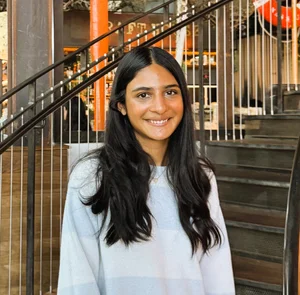
Daphna Zeilingold, Senior Vice President of Systems Engineering at Tandem Diabetes Care. (Photo courtesy of Ms. Zeilingold)
With more than two decades of experience in health tech R&D and numerous patents in wireless technology, Zeilingold has guided teams that connect sensors, software, and hardware into life-critical systems. Today, much of her focus is on insulin pumps and continuous glucose monitors, where AI is beginning to reshape how engineers design, test, and safeguard devices.
“AI is in its beginning phases of impacting systems engineering, but we are seeing it in almost every phase of development. It can walk through code, generate use cases, help find issues, devise test cases for complicated scenarios. It is making inroads pretty much everywhere.”
AI for Safer and Smarter Devices
When the product is an insulin pump or a glucose monitor, reliability is not optional. Zeilingold sees AI’s greatest immediate value in making these systems safer and smarter.
“The advantage of AI techniques today is that they are very good at analysis. They help us come up with safer ways of doing things with better algorithms but also detect when something goes wrong. If you train an AI system on usage patterns and it sees a deviation, it can raise an alarm. That is crucial for safety.”
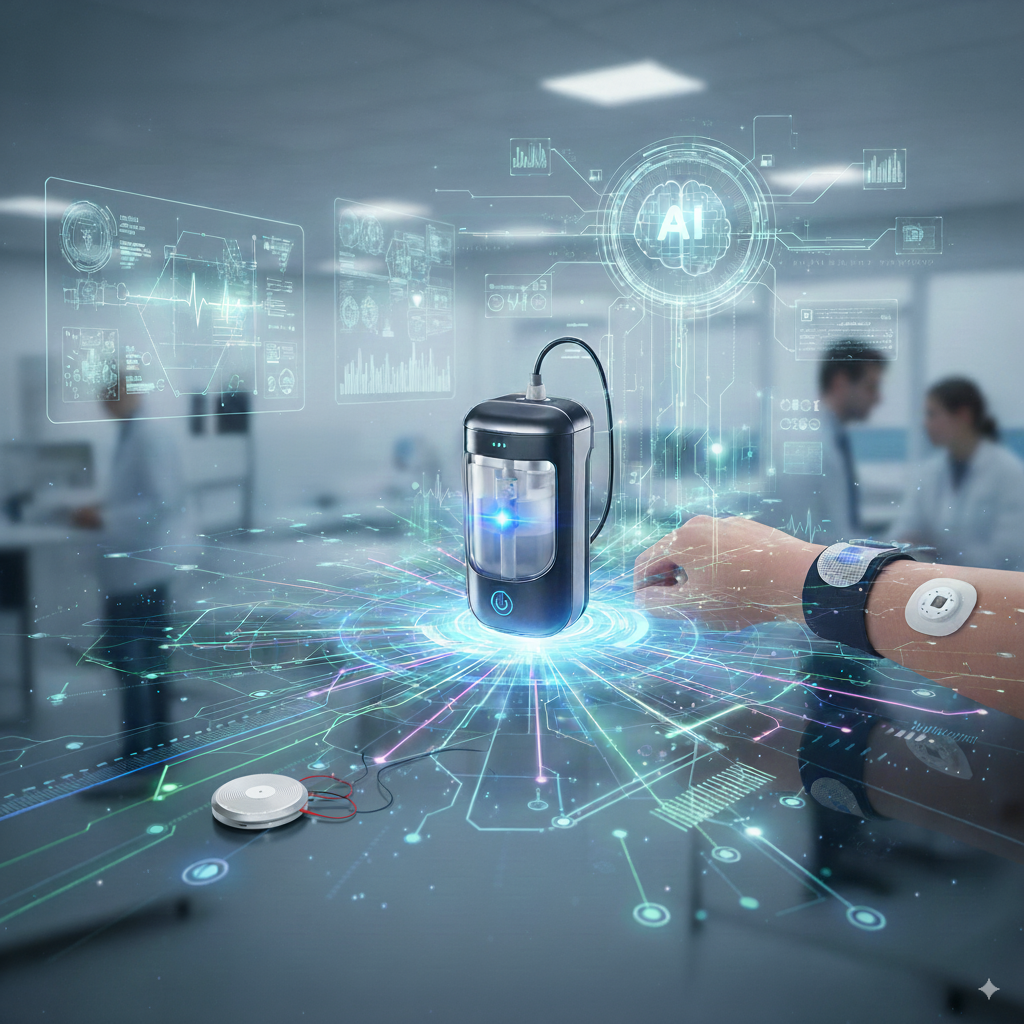
From data to decision-making, AI is turning medical devices into active partners in patient care. AI generated image: Google Gemini Nano Banana / Anika M.
Navigating the Regulatory Landscape
Integrating AI into regulated medical devices presents unique challenges. Unlike static software, AI can adapt and learn, a feature that regulators treat with caution.
“What you tested is not necessarily what is running on the device if the AI keeps learning. So, the FDA currently allows you to train offline, load it, and if you want it to get better, train again offline and reload another version. It may not be the most efficient way, but it is safer because you can test what changed.”
She added that the European Union is generally likely to take an even stricter approach, which could moderate the adoption of advanced AI in medical devices. Looking ahead, she noted that the FDA may eventually allow on-device learning. If that happens, companies will need robust guardrails. Systems would have to detect when a model is starting to behave incorrectly and address potential issues early, ensuring safety remains uncompromised.
Decision Support for Patients and Doctors
Looking forward, Zeilingold sees decision support as the area where AI will deliver the greatest impact, both for patients managing their conditions and for doctors coordinating care.
“For patients, AI could run on their device and say: I just ate, my glucose level is going up, but that is expected, do not panic. For doctors, AI can integrate massive amounts of data across specialties to suggest what is wrong and what should be done next. That is something very hard for doctors to do in silos today.”
Guidance for Students Entering the Field
Zeilingold encourages students to approach AI with both curiosity and caution.
“Job number one is to understand what AI does well and what it does not. Do not use AI for the sake of saying you are using AI. If someone says this system uses AI, ask: What kind? Where is the data from? Because if you feed it bad data, you will get bad, sometimes horrific, results.”
She also noted that college majors rooted in human insight remain essential.
“Cognitive sciences, Human Factors Engineering, Design for usability. These are still very much in the human space. They will merge with aspects of engineering that AI can do, but assessing safety, understanding people, and designing for usability remain human strengths.”
Fast Five with Daphna Zeilingold
What did you want to be when you were a kid?
Engineer or Doctor. Ended up in a place where both came together!
One task in your job you’d gladly let AI do?
Project Finances — budgets, expenses, forecasting.
Something humans will always do better than AI?
Empathy, trust, and explaining things to patients.
The last thing you asked AI? And, to which AI?
Used Copilot to summarize a technical RF presentation into simpler terms.
One job you’d never trust AI to do?
Managing a team, doing performance reviews, and navigating personnel issues.
Closing Thought
Zeilingold’s final advice to students reflects both her engineering expertise and her human-centered approach.
“Definitely become familiar with AI or any other cutting-edge technology, that is extremely important. But at the end of the day, keep the patient in mind. Sometimes just ask yourself: If I were in their shoes, how would I want this to work?”
As the next generation of innovators steps into the field, that mix of AI fluency and patient focus may prove to be the true measure of breakthrough progress in medical devices.