What AI Is Changing About Building and Betting on Startups?
Melvin Lai on how AI is changing venture capital, what investors actually look for, and why the human side of building a company may matter even more.
It has never been easier to start building a company.
Have an idea? AI can help you research the market, write code, prototype a product, analyze data, and get something in front of potential customers remarkably quickly.
For venture capital, that creates an interesting problem.
If everyone has access to increasingly powerful tools, what actually separates a great startup from the rest?
That was one of the questions I wanted to explore with Melvin Lai of Silicon Foundry, who works with large companies as they navigate emerging technologies and evaluate startups. Before moving into the venture world, Lai worked in mergers and acquisitions, giving him a perspective that spans both the people behind a company and the numbers underneath it.
Our conversation went from AI-powered financial analysis to quantum computing to a founder who literally moved in with his customers.
But one idea kept resurfacing: as technology becomes more accessible, simply having access to the technology becomes less of an advantage.
What you do with it matters a lot more.
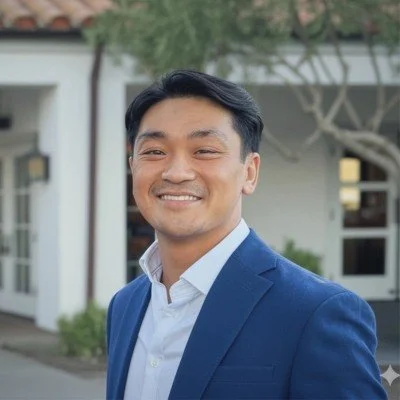
Mr. Melvin Lai, Venture Capital and Strategy, at Silicon Foundry (Photo courtesey of Mr. Lai)
Starting Is Easier Now. But is Quitting Easier Too?
Lai entered the venture space about four years ago, just before the ChatGPT boom. In that short period, he has watched the barrier to getting a startup off the ground fall dramatically.
Venture capitalists often talk about an MVP, or minimum viable product: the simplest version of a product you can build to find out whether an idea has real potential.
AI can dramatically accelerate that process.
You can test an idea, build something, get feedback and learn whether there is actually a business there much faster than before.
But Lai has noticed an interesting downside to that speed.
When building is cheap, restarting is cheap too.
A founder hits a wall. The product isn't working. Instead of pushing through the problem, it's now remarkably easy to change direction, build something new, and try again.
Some flexibility is essential in a startup. Lai's concern is knowing when you're genuinely learning that the idea needs to change, and when you're simply abandoning something because you've reached the hard part.
“The urge to kind of change things really quickly because it’s so easy to restart has been really common.”
That's an important distinction for students who look at today's AI tools and think, I could build a startup.
You probably can.
The harder question may be: What are you willing to keep building when the first version doesn't work?
The Founder Who Moved In With His Customers
When I asked Lai what separates startups when everyone can access many of the same AI tools, his answer wasn't a better model or a more sophisticated tech stack.
It was personal connection—and hustle.
Then he gave an example.
Lai had recently heard about a digital-health founder building technology for elderly-care facilities. The founder wanted to understand the customer so deeply that he moved into an elderly home!
Think about that for a second.
Instead of sitting behind a laptop trying to infer what users wanted, he was living alongside the people his company hoped to serve—seeing their routines, understanding their problems, and getting constant feedback on the product.
As Lai put it, that's taking "getting close to your customer" quite literally.
“It’s that willingness to go all-in on the problem that separates the leaders from the pack.”
AI can democratize access to information. Your competitors can use many of the same tools you can.
But they can't automatically replicate how deeply you understand a problem.
For a high school student interested in entrepreneurship, that's a useful reframing. You don't necessarily get your best startup idea by asking AI for one. Start by noticing a problem worth caring about, and then talking to the people who actually have it.
What Does a VC Actually Look At?
Lai explained that what you can evaluate depends heavily on the company's stage.
A later-stage startup may have customers, revenue and several years of financial information to analyze.
An early-stage company might have almost none of that.
So what do you evaluate when there isn't much of a business yet?
The people building it.
Lai pays particular attention to the background and composition of the founding team. Repeat founders can be attractive to VCs because they've already been through the ugly parts of company-building: a product that won't sell, a difficult fundraising environment, the need to keep going when things aren't working.
He called them "battle tested."
But experience doesn't have to mean having already built a company. A new graduate might have spent years studying a highly specialized technical problem with leading professors and have unusually deep expertise in it.
The question is whether this particular team has a credible reason to be the one that succeeds.
“Really, what VCs are looking for when they’re investing is beyond the technology; it’s the people.”
Can they turn investment into a real business? Can they scale? Can they keep going when things get difficult?
Those questions are harder to put into a spreadsheet.
How Do You Evaluate Something You Don't Understand Yet?
Lai gave me a great example from his own work.
He was evaluating an opportunity in quantum computing.
He readily admits that he isn't a quantum expert. His background is primarily in finance.
So his first job was to get smart about an extremely technical field, and quickly.
He relied on subject-matter experts who "live and breathe quantum" to help assess whether the underlying technology was legitimate. Along the way, he noticed something important about the industry: much of the innovation was emerging from universities and PhD programs rather than simply from the traditional technology hubs.
That changed what mattered when looking at a team.
Where had the technical founders studied?
What research had they done?
Did they have genuine expertise?
But technical credentials alone weren't enough. Lai also wanted to know whether the team could clearly explain what it was building and where it fit within the larger quantum landscape.
There's an important lesson here about venture capital, and frankly, about many careers in an AI world.
Sometimes the skill is knowing what you don't know, finding people who know more than you do, and then putting those pieces together well enough to make a judgment.
Where AI Is Already Changing the Investor's Work
This was where our conversation got especially concrete.
Before working in venture, Lai worked in mergers and acquisitions. Whether you're considering acquiring a company or investing in one, he explained, part of the diligence process involves looking for things that don't quite add up.
AI is making that work significantly faster.
Take ARR—annual recurring revenue, a metric commonly used for subscription businesses.
Imagine a company reports impressive recurring revenue. An investor wants to understand how much of that revenue is actually durable.
Are customers consistently paying?
Did some sign up because of a temporary incentive?
Are there customers who tried the product and then disappeared?
Answering those questions can mean working through dense sets of financial records.
Lai described using AI to analyze financial data and flag inconsistencies that deserve a closer look.
“Whatever it is, the way you tell your story It just helps save us time as well as be able to pick up things that we wouldn’t otherwise do in such a dense amount of data.”
That's a much more useful picture of AI in finance than "AI will analyze investments."
It acts as another set of eyes across a mountain of information, surfacing the places where a human should look more closely.
Two Questions Founders Should Be Ready to Answer
For students who might want to build a company someday, Lai offered two questions worth remembering:
Why you? Why now?
Why are you the person who should build this?
And why does this company need to exist now?
Those questions force founders to think beyond the fact that they can build something.
Starting a company can consume five years or more of your life. Other people may eventually depend on you for their livelihoods. There will almost certainly be periods when the product isn't working, fundraising is difficult, or the original plan falls apart.
Lai believes investors want to understand what the founder will draw on when that happens.
That's where conviction matters.
And it's also why he cautions young founders against simply chasing whatever is hot.
Right now, there's enormous excitement around AI. People are moving to San Francisco, starting companies and "vibe coding" their way into new products.
There are real opportunities there.
But hype cycles don't last forever.
“Understand that you are building something meaningful that will outlast a certain hype cycle.”
That's probably more valuable advice for a teenager interested in startups than trying to predict which AI category will be hottest five years from now.
The VC Advantage That Doesn't Come From a Screen
I asked Lai to imagine venture capital five or ten years from now.
Surely by then, finding startups and making investments will be far more technology-driven.
His answer surprised me.
Yes, the AI technology will get better. Investors already use AI for transcription, research and financial analysis.
But Lai thinks students might be surprised by how much venture capital still depends on something decidedly low-tech:
who you know and what they tell you.
VCs call part of this proprietary deal flow.
Maybe an investor hears at a dinner that a founder is quietly building a company in stealth mode. Maybe someone at a happy hour mentions that a promising startup is about to raise money. That investor can potentially learn about the opportunity before it becomes widely known.
AI can give every investor better research tools.
But if everyone has those tools, the tools themselves don't necessarily create an edge.
The information and relationships that aren't available to everyone become more valuable.
Lai calls that differentiation "alpha."
“If anything, that’s where people should lean into more – the human element, because that is really what creates real alpha.”
For students thinking about careers in venture capital, that's worth paying attention to.
Learning to analyze information matters.
So does learning to talk to people.
Fast Five
What did you want to be when you were a kid?
An astronaut.
What's one task in your job you'd gladly let AI do?
Reading and responding to emails. Lai would rather spend that time talking to people.
What's something humans will always do better than AI?
Imperfection.
Humans are great at imperfection. The things that are a little unexpected, a little off, are often what make art, music, or an idea interesting in the first place.
What's the last thing you asked AI? And, which AI was it?
ChatGPT. Advice on color scheme for throw pillows for the sofa. (and yes, the suggestions were good!)
What's one job you'd never trust AI to do?
Manage his investments. Whether public or private markets, Lai said he hasn't reached that level of comfort with AI yet.
One Last Thought
Perhaps the most useful lesson from someone whose job involves evaluating what might succeed next is this: nobody actually knows exactly what’s coming next.
AI will make building easier.
It will make analysis faster.
It may change what a tiny team can accomplish.
But Lai’s advice to future founders isn’t to become obsessed with predicting the next tool.
Get close to the problem.
Get close to the people experiencing it.
Build something you care enough about to stick with when it gets hard.
And learn how to work with people who know things you don’t.
Those skills don’t require waiting for the next version of AI. You can start building them now.